
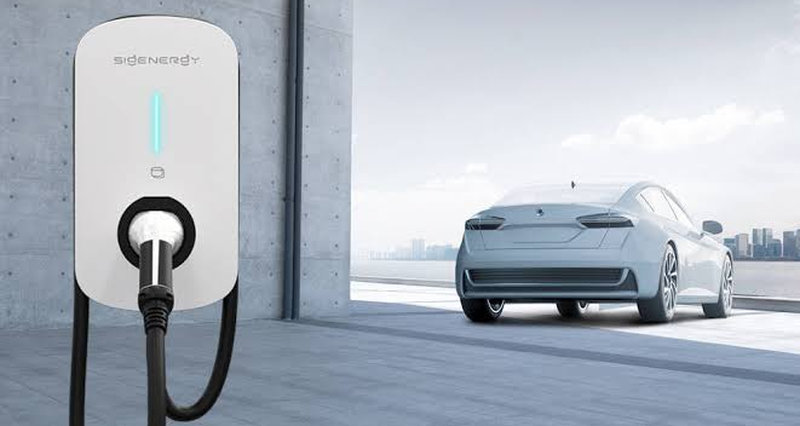
A new EV owner usually wants the cleanest answer: which charger should go on the wall first? The honest answer depends less on the car and more on the week. A commuter with predictable nights at home has a different charging problem than a family juggling two EVs and weekend trips.
The U.S. Department of Energy’s Alternative Fuels Data Center notes that Level 2 charging commonly uses 208-volt or 240-volt power, while DC fast charging supports higher-power charging by sending direct current to the battery. Those two designs are built for different rhythms.
Level 2 Is the Daily Driver
Level 2 charging sends AC power to the vehicle. The car’s onboard charger converts that AC power into DC power for the battery. Because the vehicle handles the conversion, Level 2 hardware is usually simpler and more familiar for residential installation.
For most homes, that is enough. The car sits parked overnight, the driver wakes up with the needed range, and the system does not ask for major energy planning. According to Sigenergy product information, Sigenergy’s Level 2 AC charger is rated at 11.5 kW and supports J1772 plus NACS, which is useful during the U.S. connector transition.
Level 2 also pairs well with time-of-use rates. These are utility plans where electricity prices change during the day, so the charger can be scheduled for lower-cost hours.
It is also easier to explain to an electrician, a permitting office, and a future buyer of the house.
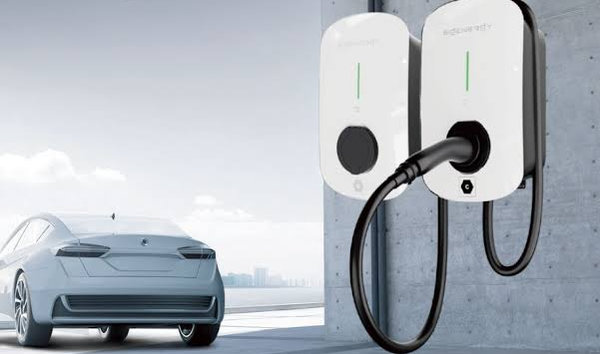
DC Fast Charging Is for Short Windows and Bigger Plans
DC fast charging moves more of the power conversion outside the vehicle. That makes faster charging possible, but it also adds more questions about electrical capacity, cost, and system design.
At home, DC charging starts to make sense when the EV is part of a broader energy setup. A household may want quick afternoon charging from rooftop solar, backup power through V2H, or future V2G participation where a utility program allows it.
Sigenergy product information lists Sigen EVDC/V2X as a 25 kW bidirectional DC charger supporting V2H, V2G, and V2X. That makes it less like a simple wall plug and more like an energy-system component.
Install the Boring Thing First, Unless the Use Case Is Not Boring
For a first EV, Level 2 is often the right first installation. It is dependable, understandable, and sized for normal parking behavior. It also avoids overspending on speed that may rarely be used.
DC charging deserves attention when one of these conditions is true:
- The vehicle is often home for short charging windows.
- The home has solar and wants to use more of it.
- The owner wants EV backup power during outages.
- The household expects two EVs or heavier daily driving.
The International Energy Agency’s Global EV Outlook 2026 says global electric car sales grew by 20% in 2025. As EVs become a standard home load, some homeowners will start with Level 2 and later add more advanced charging. Others will skip straight to a system designed for solar, storage, and bidirectional power.
The first charger should match the real use case, not the loudest spec sheet.