
Choosing an LED screen for a retail store is not only a design decision. It is an operational decision that affects marketing speed, customer experience, maintenance cost, and the way a store presents itself every day. Retailers often begin by asking what screen size they need, but the better question is what the screen must accomplish. A display at a mall entrance, a checkout area, a product wall, and a street-facing window will each have a different job.
The first factor is viewing distance. If shoppers stand close to the display, the pixel pitch should be fine enough for text, product details, and motion graphics to appear clean. If the screen is viewed from across an atrium or from the opposite side of a street, a larger format and higher brightness may matter more than close-up detail. Matching pixel pitch to the real viewing distance prevents both overspending and underperformance.
Brightness is another key consideration. Indoor retail environments are not all the same. Some stores have controlled lighting, while others sit behind glass, under skylights, or beside bright mall corridors. A screen that looks good in a dark showroom may look weak in a sunlit window. Retailers should evaluate the actual ambient light at different times of day, then choose a display that maintains contrast without becoming uncomfortable for nearby shoppers.
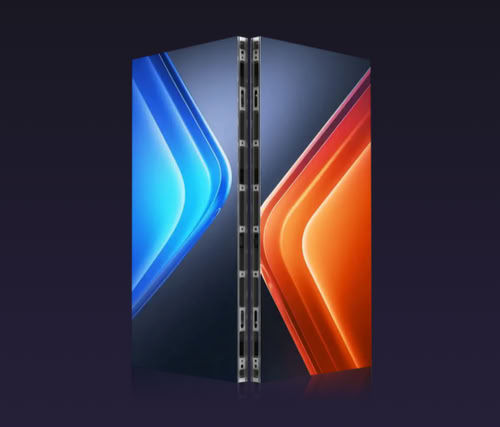
Professional commercial LED display screens are useful because they can be configured for many commercial scenarios, from close-view product storytelling to large feature walls. The right system can help retailers run seasonal campaigns, promote new collections, show product videos, and coordinate brand visuals across multiple locations. However, the screen category is only the starting point. The final specification should be based on the space.
Installation access can make or break the project. Many retail screens are installed against walls, inside windows, or in built-in fixtures where rear access is limited. In these cases, front maintenance becomes important. The project team should also plan how the screen will be mounted, how power and signal cables will be routed, how heat will be managed, and how service teams will reach the display without disrupting store operations.
Content workflow should be discussed early. A retailer may invest in a beautiful LED wall but fail to use it well if every update requires resizing files, reformatting videos, or asking a technical vendor for help. Before installation, teams should define content resolution, aspect ratio, playback schedule, media player control, and approval responsibilities. Good retail display solutions make it easy for marketing teams to keep the screen active.
Retailers also need to think about brand consistency. A chain may use different screen sizes in different stores, but the visual identity should feel unified. That means setting standards for color, motion speed, typography, content duration, and campaign timing. A flagship store may run a more cinematic version of a launch film, while smaller stores use simplified versions of the same campaign. A clear content system keeps the retail network aligned.
Budget planning should include more than the purchase price. The total cost includes structure, installation labor, control system, spare parts, content production, maintenance, and potential downtime. A lower initial price may not be attractive if the screen is difficult to service or cannot deliver the brightness, image quality, or reliability needed for daily retail operation. The most useful comparison is long-term value in the actual store environment.
Screen placement should be tested with real movement in mind. A display mounted too high may be visible but not readable. A screen placed behind reflective glass may lose contrast during daylight hours. A display near a product area may need slower content because shoppers are comparing details. Simple site observations, photos, and short customer-path studies can prevent expensive specification mistakes.
Retailers should involve merchandising, marketing, construction, and store operations in the selection process. Each team sees a different risk. Marketing cares about campaign quality, construction cares about structure and power, merchandising cares about product visibility, and operations cares about daily usability. When these perspectives are combined early, the final display plan is more likely to support the store after opening day.
Testing a short content loop before final approval can also prevent surprises. A retailer can check whether text is readable, product colors look accurate, motion feels comfortable, and the call to action is clear from the real customer path. This small step often reveals issues that drawings and specification sheets cannot show.
Finally, retailers should match the screen to the shopper journey. Storefront displays attract attention, entrance displays welcome and orient, product-zone screens educate, and checkout displays support offers or loyalty messages. A single store may need several display roles, but not every role requires the same specification. Brands comparing store formats, screen sizes, and rollout plans can explore the commercial display product range before committing to a final solution.